January 16, 2026
2026 is proving to be a wild year for visual development. Players are demanding hyper-detailed fidelity one minute and cozy, low-poly aesthetics the next.
At HPL Game Design, we don’t just chase aesthetics; we track what actually retains player attention and keeps production pipelines moving. The reality of the market right now is that you don’t need a massive AAA budget to dominate the charts—you just need a razor-sharp art direction that perfectly serves your gameplay.
If you are planning your studio’s next roadmap, here are the top six game art trends defining 2026.
1. Lo-Fi Calm 3D (Cozy Designs)
The “cozy game” genre isn’t just a niche; it is a massive market force. Players are actively looking for digital spaces where they can simply chill out and decompress.
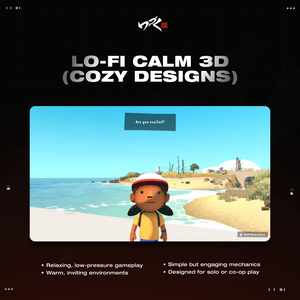
- ■ Ditching the heavy combat for exploration and building.
- ■ Soft lighting, pastel palettes, and smooth shapes.
- ■ Easy to pick up, incredibly hard to put down.
- ■ Perfect for hanging out with friends without the stress of a competitive ladder.
2. Anime-Inspired Art
Anime aesthetics have completely taken over real-time rendering. This is no longer just a subgenre—it is a global standard.
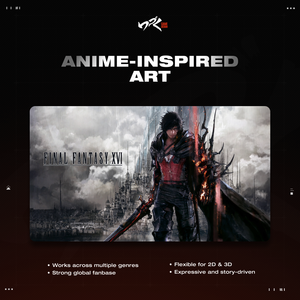
- ■ From high-octane hero shooters to sprawling open-world RPGs.
- ■ Tapping into a deeply dedicated and highly active community.
- ■ Seamlessly translates from flat illustrations to fully rigged 3D models.
- ■ Allows for massive, exaggerated facial expressions and dynamic action poses that sell the narrative.
3. 2D + 3D Hybrid Design
Mixing 2D sprites or illustrated elements into fully 3D environments is the ultimate flex in visual variety.
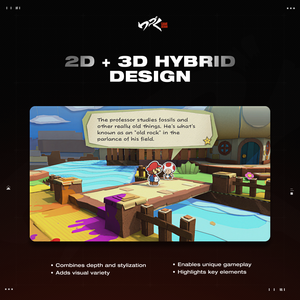
- ■ You get the spatial navigation of 3D with the charm of hand-drawn art.
- ■ Immediately helps a project stand out from the endless sea of hyper-realistic games.
- ■ Allows developers to play with gravity, perspective, and platforming.
- ■ Naturally draws the player’s eye to interactive objects without forcing glowing waypoints onto the screen.
4. Mascots & Characters
A strong character design is the absolute best marketing tool your game will ever have.
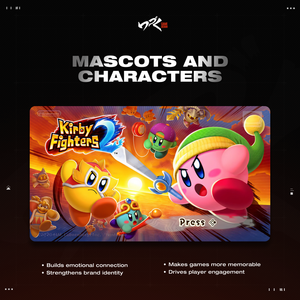
- ■ Players don’t just play the game; they attach themselves to the protagonist.
- ■ A highly recognizable character becomes the face of your studio.
- ■ Iconic outfits, distinct color palettes, and unique weapons stick in the player’s mind.
- ■ Great character designs naturally fuel fan art, cosplay, and community buzz.
5. VR / AR Development
Immersive hardware is getting lighter, faster, and much more accessible. This tech is pushing artists to think entirely outside of a flat monitor.
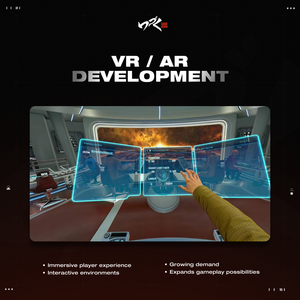
- ■ Putting the player physically inside the environment.
- ■ Every prop, texture, and lighting setup has to hold up to up-close scrutiny.
- ■ The hardware adoption rate is rising, and players want full games, not just tech demos.
- ■ Spatial audio and physical movement create entirely new ways to design puzzles and combat.
6. Isometric Design
The top-down, angled camera is experiencing a massive revival across the industry.
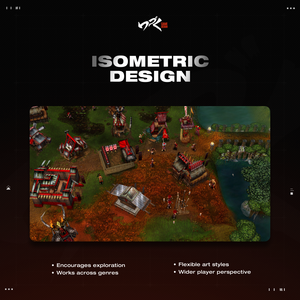
- ■ The fixed angle makes players want to check every corner of the map.
- ■ Perfect for strategy games, tactical RPGs, and life simulators.
- ■ Looks incredible whether you are using retro pixel art or high-end 3D rendering.
- ■ Gives players a tactical, overarching view of the environment and their enemies.
The industry is moving incredibly fast, and visual identity is what will make or break a launch this year.